Every job below is one we do ourselves across Buena Park.
A leak almost never shows up right above where the water actually gets in, so we trace it back through the attic before touching a shingle. Most of the time it's failed flashing around a chimney or vent pipe, or underlayment that's cracked and dried out past its life. We patch what's actually broken instead of re-sealing the spot where the stain appeared.
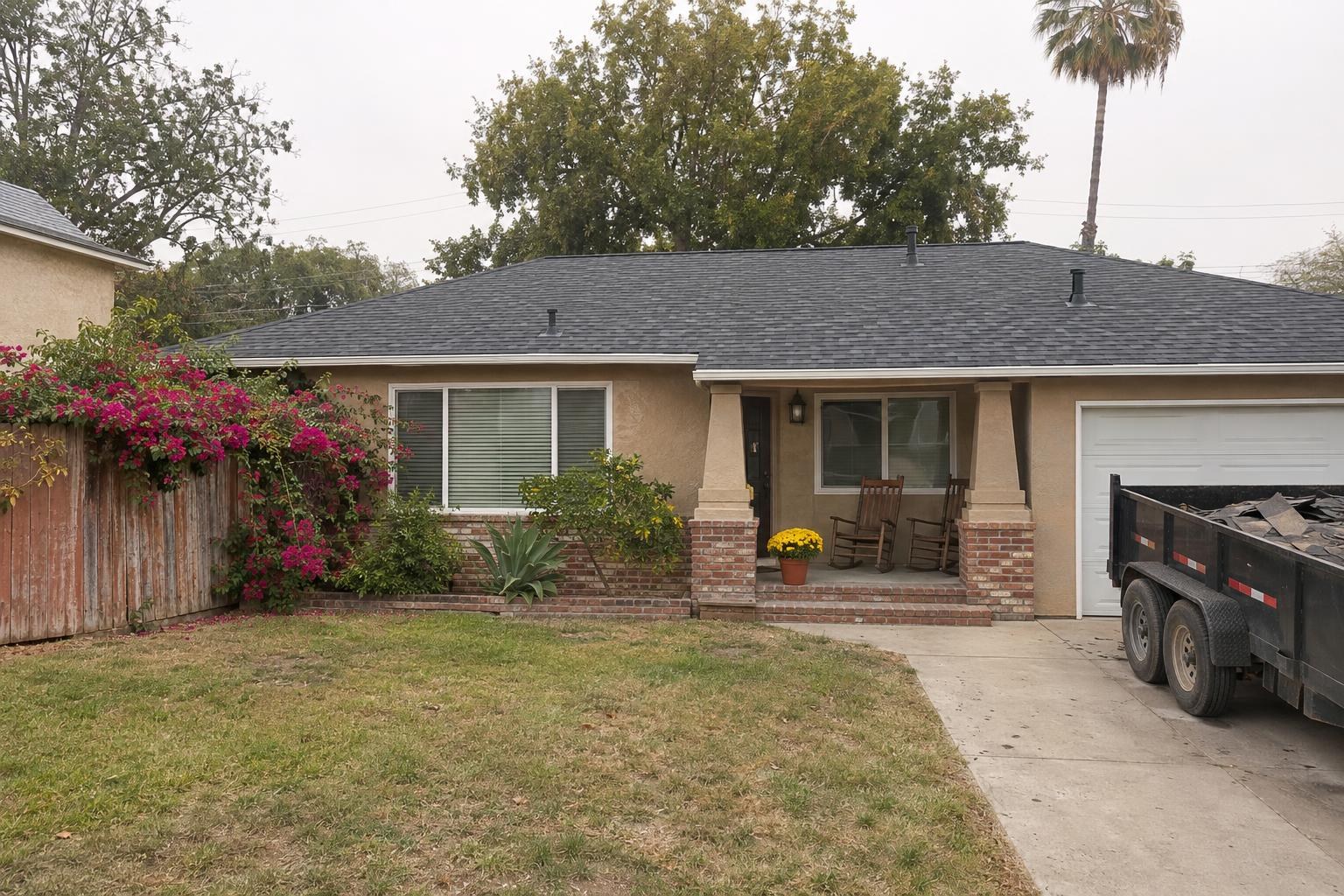
A full tear-off down to the decking, replacing any rotted boards, new underlayment, new drip edge, then shingles or tile back on top. We check the decking for soft spots as we go, since that's the part you can't see once the new roof is on. This is the right call once a roof has multiple failure points instead of one.
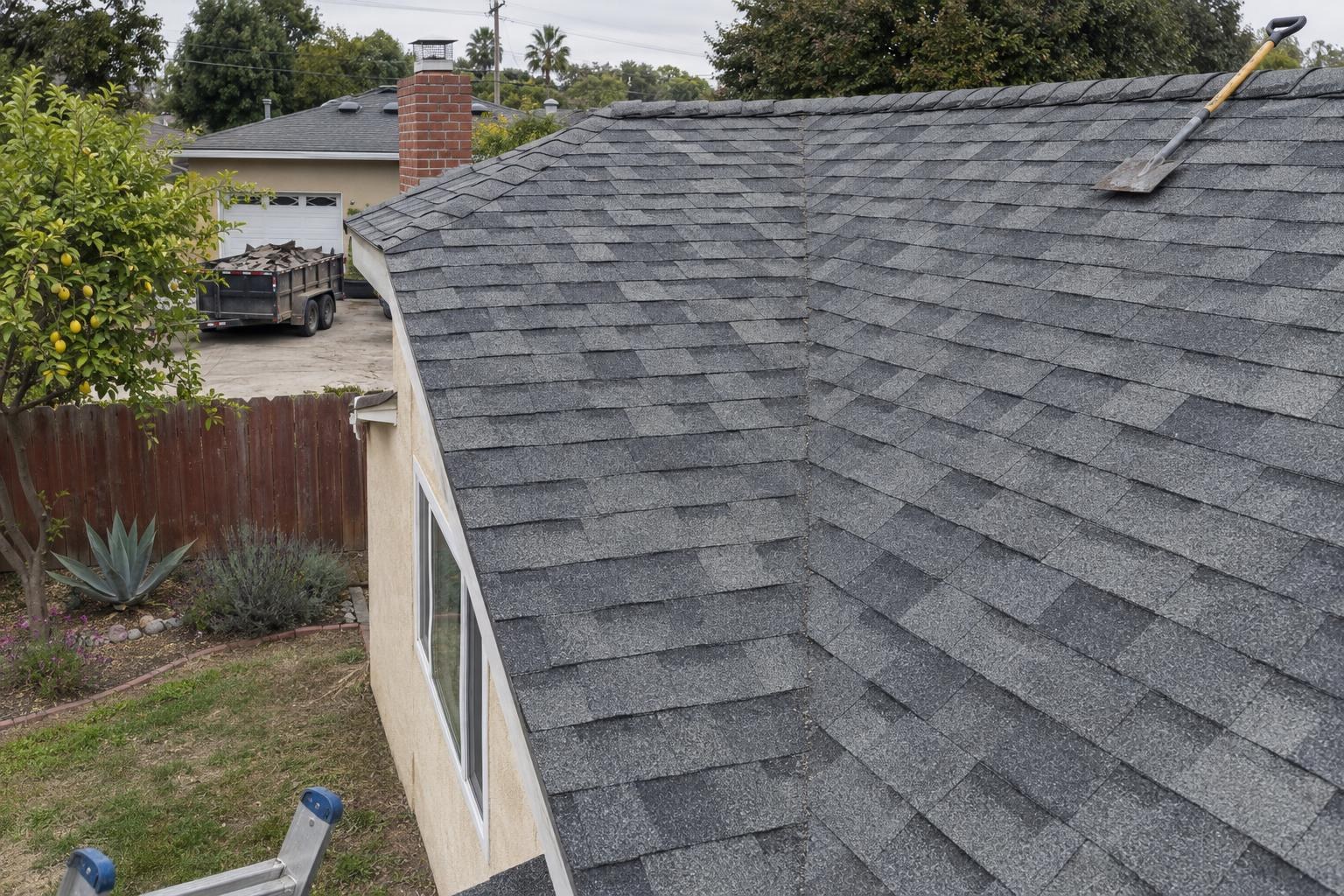
Architectural shingles installed with the nailing pattern and starter strip the manufacturer's warranty actually requires, not just whatever's faster. Synthetic underlayment goes in instead of felt on most jobs, since it holds up better if the roof sits exposed for a day or two mid-project. Ridge vents go in at the same time so the attic can actually breathe.
Clay and concrete tile crack from foot traffic more than from weather, so we work off ladders and walk boards instead of across the field of tile. We reset slipped tile, replace the cracked pieces, and check the battens and underlayment underneath, since that's usually what failed first, not the tile itself.
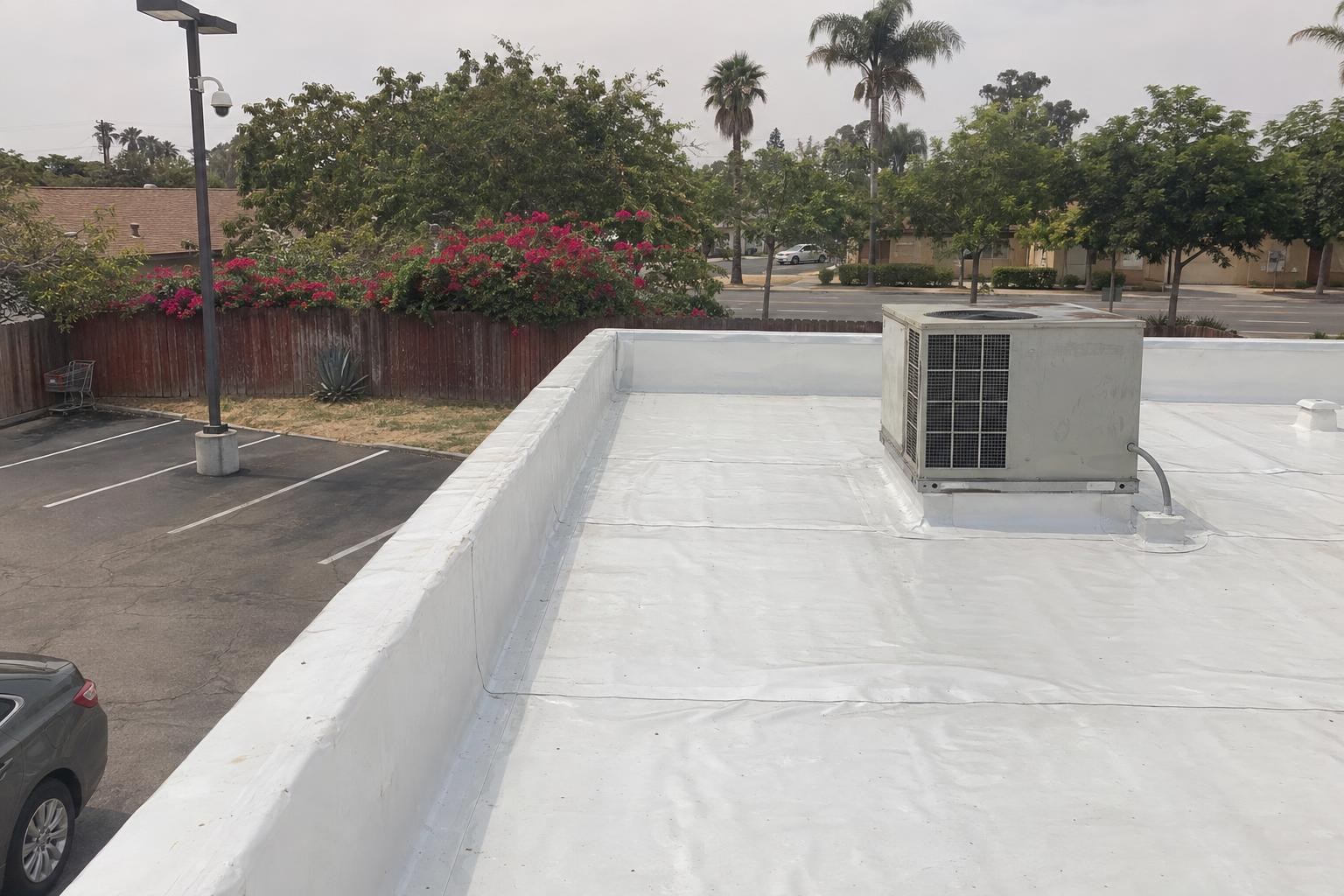
Flat and low-slope roofs on additions and garages fail at the seams, not across the field, so we check TPO and modified bitumen seams first for separation. Ponding water sitting more than 48 hours after rain is the early warning sign most homeowners miss. We re-seal or patch the section, and if the slope itself is the problem we'll say so instead of patching the same spot every year.
A roof certification is a written report on the remaining life of a roof, usually needed for a home sale, refinance or insurance renewal. We walk the full roof, note the age, condition and any visible damage, and put a number of years on what's left. Insurance companies and escrow officers accept these as a standard document.
Gutters that pitch wrong or pull away from the fascia dump water straight down the side of the house instead of to the downspout. We re-hang sagging sections, reset the slope, and replace fascia board where overflow has already started rotting it. New gutter runs get sized to the roof's actual square footage, not a standard size.
A roof needs intake at the eaves and exhaust at the ridge in roughly equal amounts, and most older homes have neither sized correctly. We add ridge vents, box vents or a power vent depending on the attic layout, which cuts down the heat that bakes shingles from underneath in summer. Bad ventilation is also one of the quiet reasons shingles fail years early.
Skylight leaks almost always come from the flashing kit around the curb, not the glass itself, so we start there before assuming the unit needs replacing. We install new skylights with a proper curb and step flashing tied into the surrounding shingle or tile. Condensation around the frame in winter is normal, water coming in during rain is not, and we can tell you which one you've got.
Santa Ana winds lift shingles at the tab edge, and hail bruises the granule surface without always cracking the shingle, both easy to miss from the ground. We tarp the same day if there's an active leak, then do a full damage assessment with photos for your insurance claim. Replacing a handful of wind-lifted shingles is usually enough if the rest of the roof is sound.
Four steps, and no surprises in any of them.
You tell us what you want doing, we look at what is actually there, and we ask the awkward questions early.
In writing, itemised, free. If something might add cost later we flag it now rather than at the end.
Same crew throughout. We cover your floors, keep the dust down and tidy up before we leave each day.
You point out anything you are not happy with and we fix it before the invoice, not after.
Roofing work covers Buena Park and the cities within roughly an hour's drive.
Questions that come up once a roofing job is actually underway.
Describe the problem and we will tell you what it probably is. No obligation.